
In most Sapulpa homes the air conditioner, the furnace and a long run of ductwork live in the attic. On a July afternoon that attic can reach 130°F or more, so cool air loses heat before it ever reaches the bedrooms, and the rooms at the far end of the duct runs stay warm no matter where the thermostat sits. In winter the same attic pulls heat out through every can light, wiring hole and top plate.
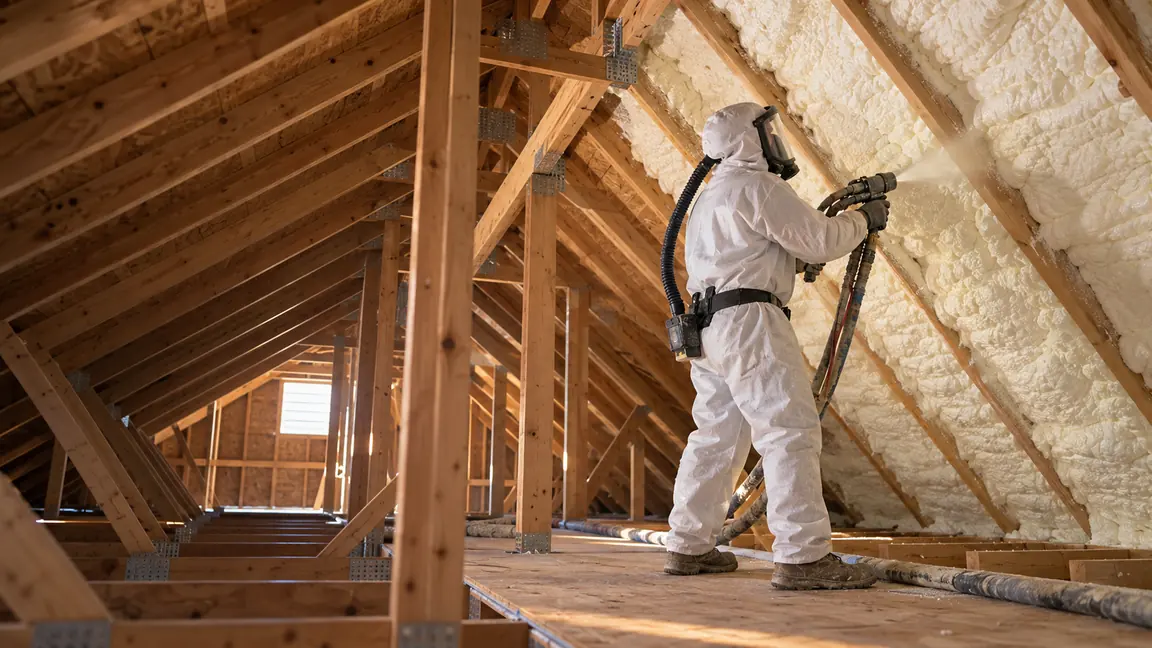
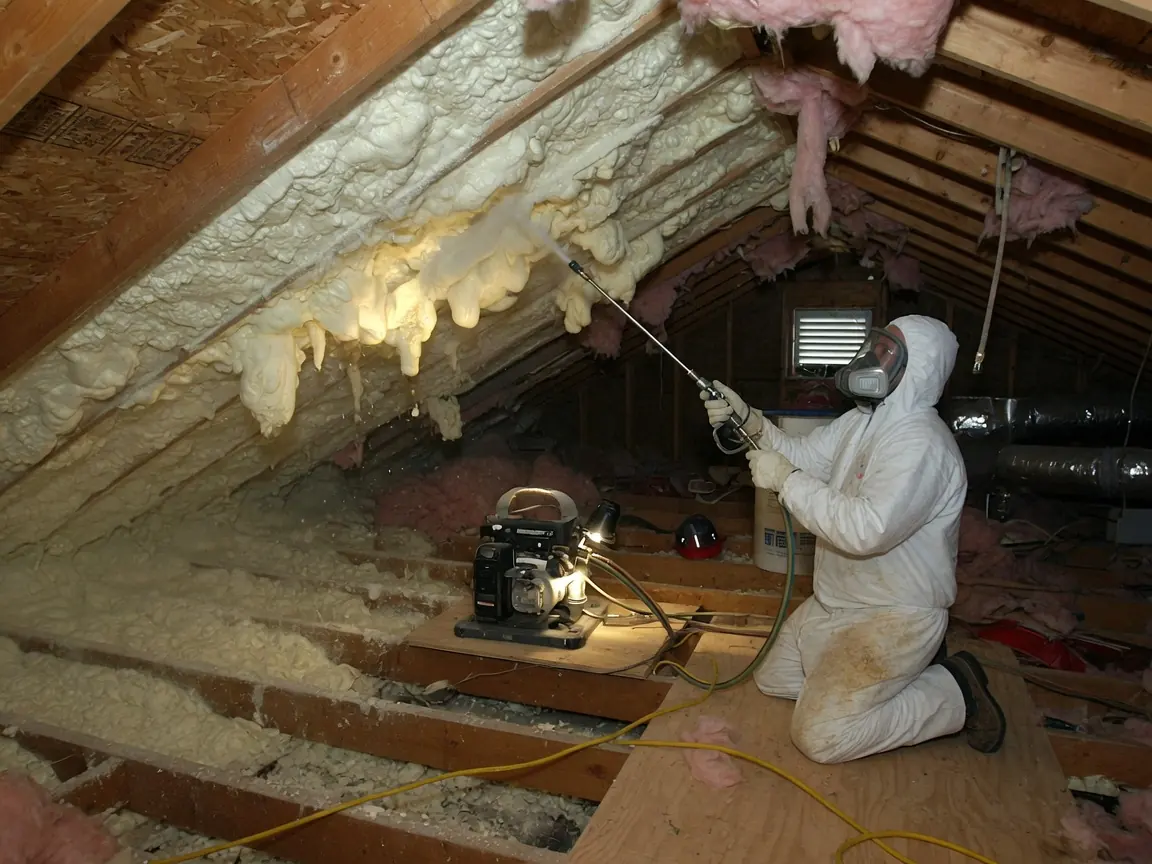
Attic spray foam insulation moves the insulation from the attic floor up to the underside of the roof deck. The attic becomes a sealed, semi-conditioned space that stays close to indoor temperature, so the ducts and equipment work in mild air instead of an oven. Open-cell foam is the usual choice for roof decks because it fills deep rafter bays affordably, while closed-cell foam fits shallow rafters and older homes where more R-value per inch matters.
Every attic job starts with a free estimate. We check the decking for leaks and moisture, look at rafter depth, wiring and existing insulation, and give you a written quote with the foam type, thickness and price before any work begins.
TipA foamed roof deck is a sealed attic, so the soffit and ridge vents are closed off, not left open. Any installer who plans to foam the deck and keep the attic vented is setting you up for humidity problems.
Signs You Need Attic Spray Foam Insulation
- Upstairs or back bedrooms run several degrees warmer than the rest of the house
- Your AC runs nearly nonstop on summer afternoons
- Ductwork and the HVAC unit sit in the attic
- Old insulation is thin, settled, wet or full of droppings
- Ceilings feel warm to the touch in the evening
- You can see daylight or feel drafts around the attic hatch and can lights
Open-Cell or Closed-Cell Foam for Your Attic
Open-cell spray foam is about R-3.5 to R-3.8 per inch and is usually installed 5.5 to 7 inches thick on the roof deck. It is the most cost-effective way to seal a typical Sapulpa attic with 2x6 or larger rafters, it dampens sound well, and because it is vapor permeable it lets a small roof leak show up as a damp spot instead of hiding it.
Closed-cell spray foam is about R-6 to R-7 per inch, so 3 to 4 inches gives similar thermal performance in less depth. It suits shallow rafters in older homes, low-slope sections and attics where moisture control is the priority. It costs more per board foot, so we usually recommend it only where its strengths actually matter. Either way, foam left exposed in an attic needs the ignition barrier or coating that code calls for, and we include it in the quote when required.
Attic Spray Foam Insulation Services We Offer
Roof deck spray foam (sealed attic)
Foam on the underside of the roof deck and gable walls so the whole attic, ducts included, stays near indoor temperature.
Attic air sealing
Sealing top plates, plumbing stacks, wiring holes, can lights and the attic hatch when insulation stays on the attic floor.
Old insulation removal
Vacuuming out settled, wet or rodent-contaminated fiberglass or cellulose before new insulation goes in.
Knee walls and bonus rooms
Foam on knee walls and sloped ceilings around bonus rooms that never cool off in summer.
Blown-in top-ups
When ducts are not in the attic, air sealing plus blown-in insulation on the attic floor is often the better value.
Attic Spray Foam Insulation Cost in Sapulpa, OK
| Project | Typical Range | What Affects It |
|---|---|---|
| Attic roof deck, about 1,500 sq ft, 5.5 in open-cell | $3,700 to $6,600 | Roof pitch, gable walls, access |
| Attic roof deck, about 2,300 to 2,600 sq ft (2,000 sq ft house) | $5,700 to $11,400 | Thickness, open vs closed-cell |
| Closed-cell on shallow rafters, per 1,000 sq ft at 3 in | $3,000 to $6,000 | Rafter depth, number of passes |
| Old insulation removal | $1.00 to $2.00 per sq ft | Depth, droppings, attic access |
| Air sealing plus blown-in top-up to about R-38 | $1.00 to $2.00 per sq ft | Existing depth, number of penetrations |
Planning ranges for the Sapulpa area. Your free estimate replaces them with an exact written price before any work starts.
How It Works
Inspect and measureWe check the decking for leaks and moisture, measure the roof deck, and note wiring, ducts and ventilation.
Prep and protectWe cover the attic floor and equipment, protect the living space and seal off the attic hatch.
Close vents and spraySoffit and ridge vents are sealed, then foam goes on the deck and gable walls in proper passes.
Cure and walkthroughAfter curing and ventilation we clean up, check depth and walk the attic with you.