
Many Sapulpa homes, especially older houses and pier-and-beam construction, sit over a vented crawl space. In an Oklahoma summer those vents bring in warm, humid air that meets cooler ground and framing underneath the house, and the moisture condenses. The results are familiar: musty smells upstairs, sagging fiberglass batts, damp wood, and floors that feel cold every winter.
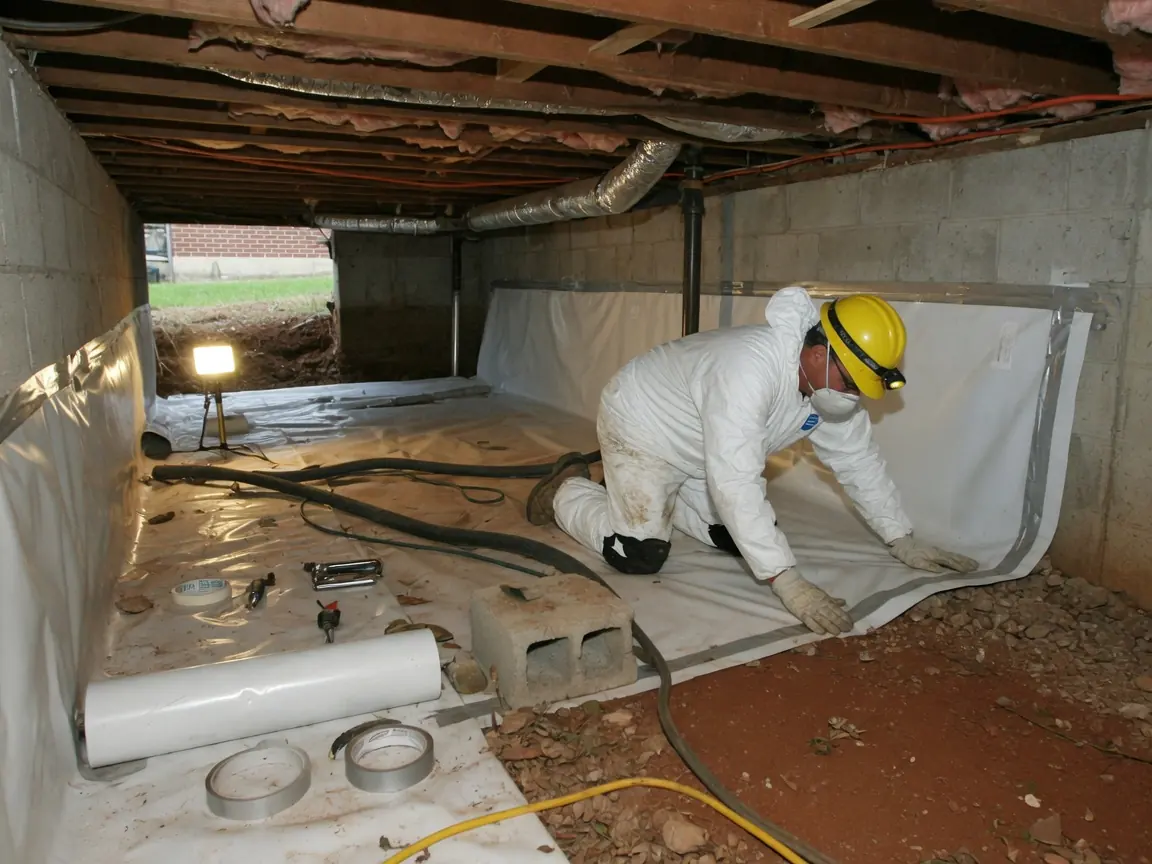
Crawl space encapsulation closes that loop. A heavy liner covers the ground and runs up the foundation walls, the vents are sealed, closed-cell spray foam insulates the walls and rim joists, and a dehumidifier or a small supply of conditioned air keeps humidity in check. Instead of a damp space under the house, you get a dry, semi-conditioned crawl space that protects the framing and the air you breathe.
Every crawl space job starts with a free estimate. We check for standing water, drainage problems, wood damage and plumbing leaks first, because those have to be solved before a liner goes down.
TipFix water before you seal. If water flows into the crawl space after heavy rain, gutters, grading or a drain need attention first. A liner over running water just hides the problem.
Signs You Need Crawl Space Encapsulation
- Musty or earthy smell inside the house
- Cold floors in winter, especially over the crawl space
- Insulation hanging down or falling from the floor joists
- Condensation or rust on ducts and pipes under the house
- Visible mold or dark staining on joists
- Standing water or damp soil after rain
Encapsulation, Wall Insulation or Both?
Full encapsulation means a 10 to 20 mil liner over the ground, sealed seams, the liner run up and fastened to the foundation walls, sealed vents and doors, and humidity control. Most building scientists agree that a sealed crawl space performs better than a vented one in humid climates like ours, and the target is keeping relative humidity below about 60 percent.
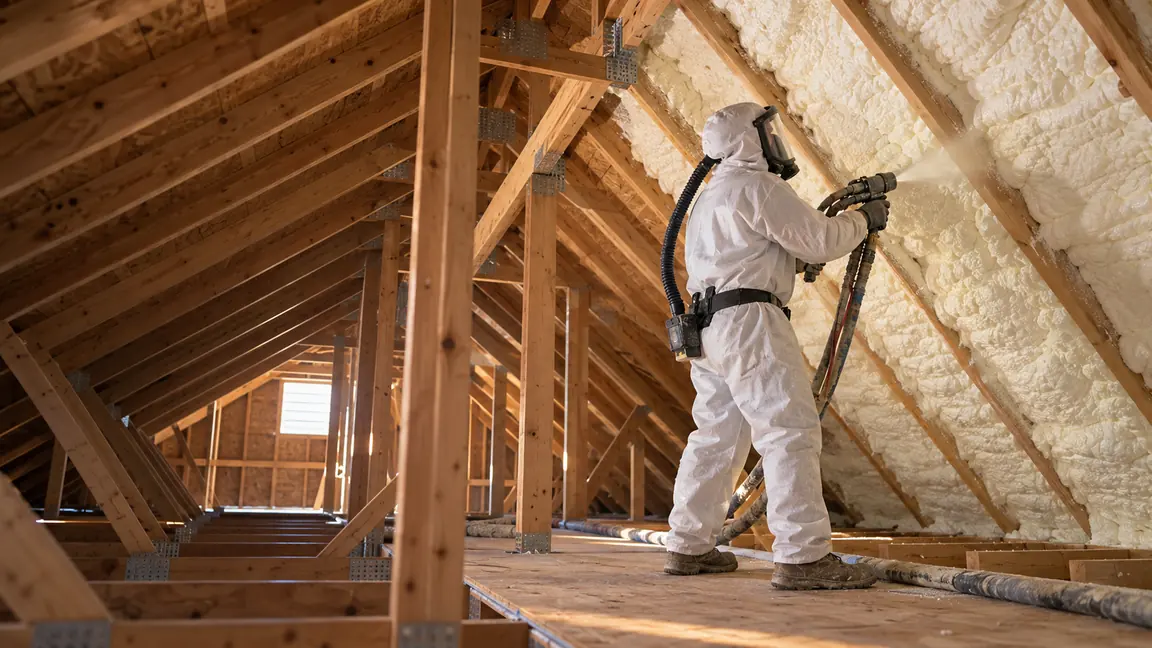
Closed-cell spray foam on the foundation walls and rim joists insulates the space and seals the gaps where outside air, insects and rodents get in. It is a vapor retarder at about 1.5 inches and does not sag like fiberglass batts between floor joists. Some homes only need the rim joists foamed and the vents sealed; others need the full system. We will tell you which fits your house.
Crawl Space Encapsulation Services We Offer
Full crawl space encapsulation
Heavy ground liner up the walls, sealed seams and vents, foam on walls and rim joists, and humidity control.
Rim joist and foundation wall foam
Closed-cell foam on rim joists and walls to stop drafts, cold floors and pest entry.
Old insulation removal
Pulling down sagging, wet or moldy fiberglass batts from between the floor joists.
Vent and access door sealing
Closing foundation vents and fitting an insulated, sealed access door.
Dehumidifier coordination
Sizing a crawl space dehumidifier or conditioned-air supply so humidity stays in a safe range.
Crawl Space Encapsulation Cost in Sapulpa, OK
| Project | Typical Range | What Affects It |
|---|---|---|
| Full encapsulation, 1,000 to 1,500 sq ft crawl space | $3,500 to $7,500 | Liner thickness, wall height, prep |
| Crawl space walls and rim joists, closed-cell foam only | $1,500 to $3,500 | Perimeter length, wall height, access |
| Crawl space dehumidifier, installed | $1,500 to $2,500 | Unit size, drain routing |
| Simple drainage improvements | $800 to $1,200 and up | Grading, drain line, sump needs |
| Old batt insulation removal | $1.00 to $2.00 per sq ft | Condition, mold, access height |
Planning ranges for the Sapulpa area. Your free estimate replaces them with an exact written price before any work starts.
How It Works
InspectWe check moisture levels, drainage, wood condition, plumbing and the existing insulation.
PrepareDebris and failed insulation come out, and any water problems are addressed first.
Seal and insulateThe liner goes down and up the walls, vents are sealed, and closed-cell foam goes on walls and rim joists.
Control humidityA dehumidifier or conditioned-air supply is set up and we confirm humidity readings with you.